Stop the Government Scrapping Our Regional Bike Infrastructure
Replacing working public docking stations with expensive, contracted commercial dockless bikes.
Orderly docks, 100% clear footpaths
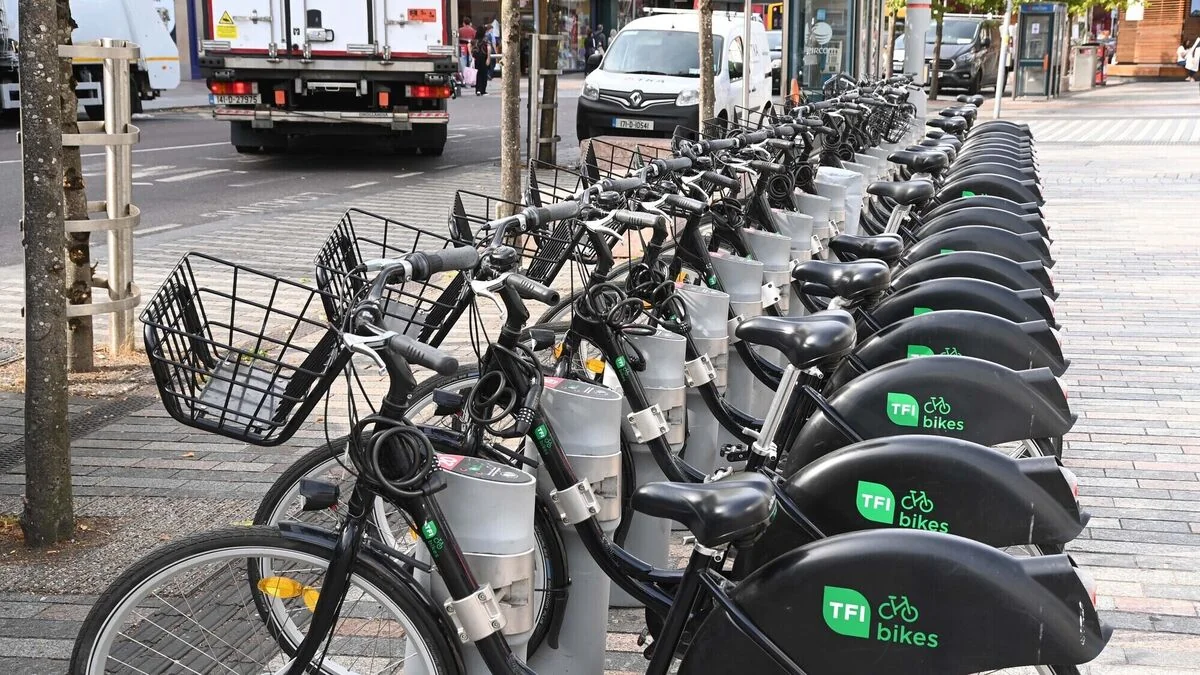
- ✓Guaranteed Clear Footpaths: Permanent steel bays keep public pavements completely unobstructed for wheelchairs and prams.
- ✓Fixed Physical Stations: Ground-anchored steel bays keep bicycles locked securely.
- ✓Universal €10/Year: Single flat annual pass covers Cork, Galway, Limerick, and Waterford with unlimited 30-min rides.
Commercial clutter, blocked wheelchair & pram access
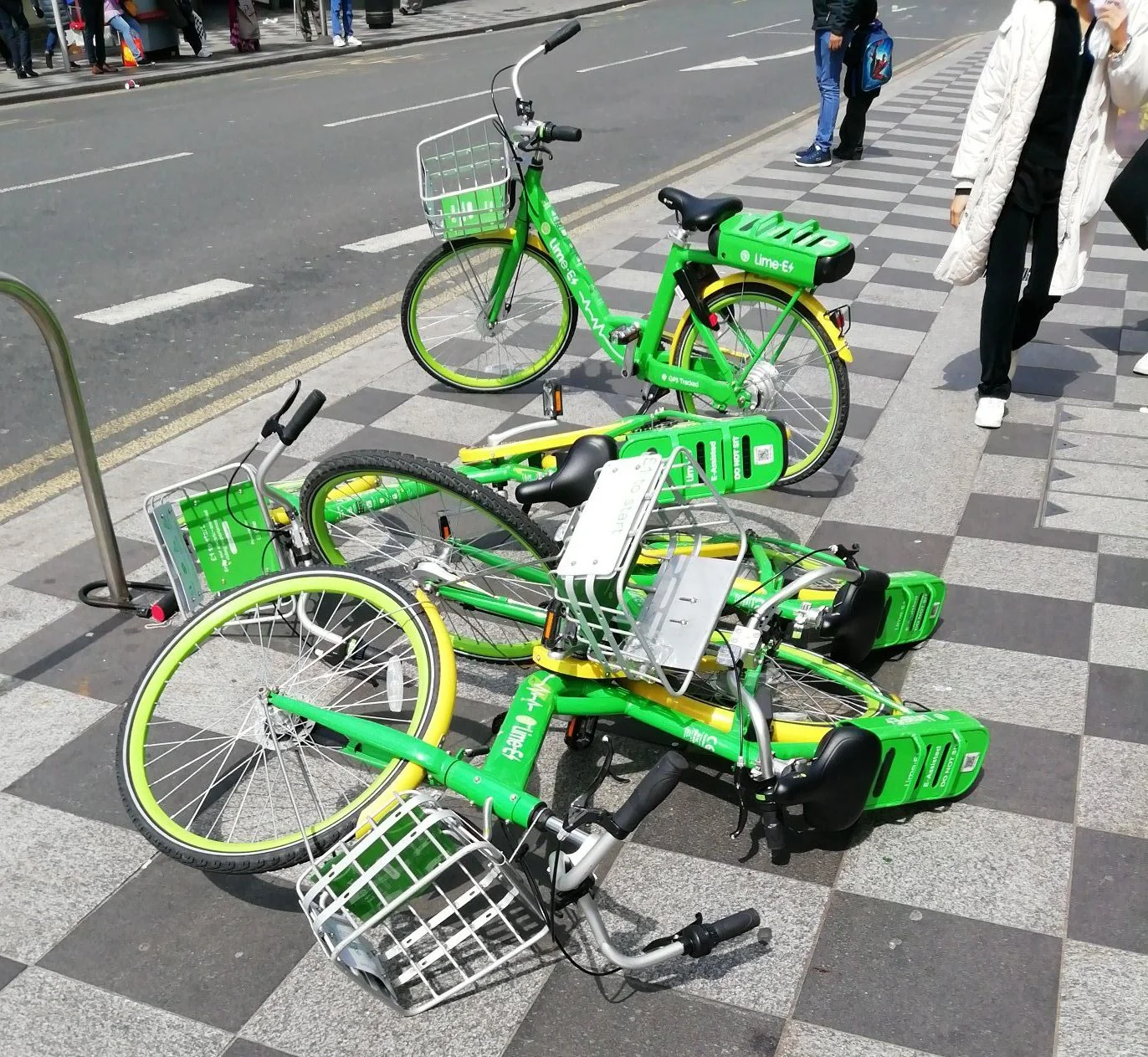
- ✗Severe Accessibility Hazard: Dumped dockless bikes block railway station ramps, bus stops, and footpaths.
- ✗Exploitative Per-Minute Billing: €1 unlock plus €0.20-€0.29/min drives commuter costs from €10/year to over €2,400/year.
- ✗Zero Public Subsidy: Official tender terms mandate zero ongoing operational subsidy, forcing operators to cut maintenance and flood streets with short-life hardware.
Save Our Regional Public Bike Schemes
Demand the Minister for Transport protect permanent docking stations, deploy warehoused e-bikes, and safeguard affordable fares.
Why I Put This Site Together: I Rely on These Bikes Every Day
Every working morning, I walk off the train and unlock a TFI bike to get across town. Like thousands of nurses, students, retail workers, and civil servants across Cork, Galway, Limerick, and Waterford, it is the only part of my daily journey that is reliable, affordable, and never stuck in Atlantic gridlock. It costs ten euro a year.
A couple of weeks ago, wondering when the electric bikes were going to arrive, I started digging through the National Transport Authority documents. What I discovered made my stomach drop.
The Government is not expanding our service. Their retender contract mandates the wholesale physical excavation and destruction of our permanent, physical docking stations across all four cities. At the same time, despite public e-bikes proving hugely popular since their launch on the streets in Cork, the tender plans to pull working e-bikes off our streets and lock hundreds of newly procured public electric bikes away in commercial warehouses for up to 18 months. While taxpayer-funded battery assets sit idle and degrade, the State prepares to hand our streets over to commercial dockless operators charging commuters upwards of 2,400 euro a year with zero public subsidy.
After watching 336,000 euro spent on an 18-bike shelter at Leinster House and 1.4 million euro on a single security kiosk in Dublin, the State is now quietly preparing to demolish working public transport across 96 permanent stations in our regional cities. I am not a lobbyist, an activist, or a bike vendor. I am just an ordinary commuter who refuses to let civil servants quietly wreck something that actually works. Please sign the petition above before the November 4 retender deadline.
Detailed Briefings and Action Dossiers
Select an action dossier below to inspect the economic data, municipal council impact profiles, Dail parliamentary questions, or media materials without endless scrolling.
A Pattern of Public Waste: From Dublin Prestige to Regional Demolition
Irish taxpayers recently expressed widespread frustration over civil service capital allocation in Dublin. Now, the Government plans an act of financial destruction that dwarfs previous OPW scandals combined.
1. Leinster House Bike Shelter
Scope: 18 Bicycle Spaces | Unit Waste: 18,666 Euro Per Space
The OPW expended over a third of a million euro on a simple covered rack for politicians, sparking nationwide political ridicule and ongoing parliamentary scrutiny. Status: Nationwide Scorn
2. Merrion Street Security Kiosk
Scope: Single Security Entry Checkpoint | Facility Cost: Record Expenditure
The OPW spent 1.4 million euro on a single security entry booth at Government Buildings, triggering cross-party outrage over uncontrolled civil service capital allocation. Status: Formal Inquiries
3. Regional Street Demolition
Scope: 4 Regional Cities | Action: Wholesale Street Excavation
The Government plans to pay contractors to unbolt, excavate, and scrap functional permanent stations serving hundreds of thousands of commuters, while pulling popular e-bikes off streets into storage. Status: Imminent Retender
Pulling Popular Public E-Bikes Off City Streets into Commercial Storage
Public electric bikes introduced on the streets in Cork have proven exceptionally popular with commuters, demonstrating high daily demand for fast, sustainable city travel. Yet under the Government retender plan, instead of expanding this successful model to Galway, Limerick, and Waterford, working public e-bikes will be pulled off city streets. Together with newly procured public e-bikes, they are scheduled to sit locked inside commercial storage warehouses for up to 18 months at ongoing taxpayer expense. Without regular charge cycling, lithium-ion battery cells suffer permanent chemical degradation, destroying public capital and stranding riders while working bikes sit idle in depots.
The Proven Public System vs The Privatised Scheme
Compare the verified operational facts of Ireland's current regional public utility against the commercial dockless replacement planned by the Government.
| Performance Metric | Current TFI Regional Public Scheme | Proposed Commercial Dockless Replacement | Civic & Commuter Impact |
|---|---|---|---|
| Annual Subscription | 10 euro per year (covers all 4 cities) | 186 to 350+ euro per year (separate passes) | 18x to 130x increase in annual commuter costs (186 to 1,300+ euro) |
| Daily Commuter Cost | 0.00 euro per trip (first 30 min free) | 10.00 to 12.00 euro per day (1 euro + 0.25/min) | Jumps daily commuting costs to over 2,400 euro per year |
| Free Ride Window | First 30 minutes free on every single trip | Zero free minutes (metered from second 1) | Eliminates free active travel for 92% of current journeys |
| Physical Infrastructure | Permanent ground-anchored docking stations | No fixed docks (painted street boxes or free-floating) | Destroys taxpayer street infrastructure across 4 cities |
| Footpath Accessibility | 100% off-pavement order, clear corridors | Pavement clutter, overflowing rail hub corrals | Severe tripping hazard for disabled & visually impaired |
| New Public E-Bikes | Popular on Cork streets; ready for regional rollout | Pulled off streets and mothballed in commercial storage | Taxpayer assets locked away for 18 months while battery cells degrade |
| Hardware Durability | 10+ year lifespan (refurbished locally in Ireland) | 12 to 24 month lifespan (disposable imported frames) | High environmental waste and street dumping risk |
| Public Operating Subsidy | Managed civic utility supported for public benefit | Zero ongoing operational subsidy (Tender Terms) | Commercial operator forced to maximise per-minute extraction |
| Regional Portability | One single 10 euro pass covers all 4 cities | Fragmented municipal markets with separate apps | Penalises inter-city commuters, students, and regional workers |
| Access Requirements | Leap Card integration or standard web access | Mandatory smartphone, cellular data, credit cards | Excludes lower-income families, elderly riders, and youth |
What Cork, Galway, Limerick, and Waterford Stand to Lose
The Government centralised Dublin plan ignores regional urban realities. Here is what is at stake on the streets of our four regional cities, accompanied by an emergency plenary motion for City Councillors.
150,000+ Annual Trips
36 Stations | 330 Bikes
Key Corridors: Kent Station, UCC, MTU, Cork University Hospital (CUH), South Mall, and Marina. Cork received 100 docked public e-bikes in April 2025. Scrapping docks strands Munster's newest fleet and deprives CUH shift workers of guaranteed 24/7 bikes.
Dense Commuter Hub
24 Stations | 205 Bikes
Key Corridors: Ceannt Station, University of Galway, University Hospital Galway (UHG), Eyre Square, and Salthill. Galway's narrow medieval streetscape cannot accommodate dockless clutter. Footpath obstruction along Shop Street directly threatens pedestrian and wheelchair access.
Rapidly Expanding Grid
23 Stations | 215 Bikes
Key Corridors: Colbert Station, UL Active Travel Path, TUS, and O'Connell Street. Limerick's directly elected Mayor and Council hold democratic authority over street space. Demolishing Colbert Station docks without Council consent directly undermines municipal autonomy.
Installed in 2022
13 Stations | 110 Bikes
Key Corridors: Plunkett Station, SETU, The Quays, and Viking Triangle. Waterford received its modern docked public infrastructure just four years ago. Tearing up brand-new ground stations along The Quays scraps public capital mid-lifecycle before reaching half its design life.
Emergency Municipal Plenary Motion: Protection of Regional Docked Bike Infrastructure
For Plenary Agendas: Cork City Council, Galway City Council, Limerick City and County Council, Waterford City and County Council
Four Dail Parliamentary Questions and Automated Email Generator
Teachtai Dala hold direct constitutional powers to hold the Minister for Transport accountable on the Dail order paper. Citizens can use the automated tool below to contact their constituency representatives immediately.
Contact Your Regional Representatives
Select your city to generate an automated message to your constituency TDs, regional mayors, and municipal transport leads.
Why Formal PQs Stop Tender Mismanagement
Written Parliamentary Questions compel the Department of Transport and the Government to produce verified commercial records, warehouse lease invoices, and civil works estimates under statutory penalty. Once entered into the official Dail record, civil servants cannot quietly approve infrastructure destruction contracts.
Below are the four audit-ready Parliamentary Questions formatted for immediate submission by TD parliamentary assistants and researchers before the November 4 deadline.
Whistleblower Briefing and Primary Documentation
The full unedited public interest disclosure circulated to Teachtai Dala, Regional Mayors, and City Councillors by frontline professionals connected to the regional public transport network.
TARGET: Members of Dail Eireann, Regional Mayors, and City Councillors (Cork, Galway, Limerick, Waterford)
SUBJECT: Government Regional Bike Share Retender: Destruction of Public Assets and Termination of Affordable Utility Fares
Dear Public Representative,
We are writing to you as concerned professionals and workers connected to the regional public transport network across Munster and Connacht. We are taking this step because strict statutory gag orders and commercial penalties prevent staff from speaking publicly about a catastrophic policy decision currently being finalised inside the Government in Dublin.
On November 4, 2026, the Government is scheduled to publish a retender specification that will quietly seal the fate of our regional bike schemes in Cork, Galway, Limerick, and Waterford. Unless regional public representatives intervene immediately, the Government intends to dismantle and scrap over a decade of publicly funded docked bike stations, replacing an affordable public utility with privatised, venture-backed dockless commercial operators.
We urge you to review the following four documented facts:
1. THE DESTRUCTION OF WORKING PUBLIC INFRASTRUCTURE: Over the past decade, millions of euro of taxpayers' money has been invested in 96 ground-anchored physical docking stations across Cork, Galway, Limerick, and Waterford. These stations are built with industrial-grade, marine-treated materials engineered to withstand Atlantic coastal weather. They have operated reliably for ten years and remain fully functional. The Government plan is to pay private civil engineering contractors an estimated 1.0M to 1.5M euro to unbolt, excavate, and destroy these stations, grinding off anchor bolts and repaving streetscapes at public expense. During formal tender proceedings, prospective operators asked why the State would not permit an incoming operator to reuse this functional, publicly owned infrastructure. The Government explicitly refused in writing. In the wake of the 336,000 euro Leinster House bike shelter and the 1.4 million euro Merrion Street security kiosk, spending public funds to demolish over a decade of working public street infrastructure is indefensible.
2. PULLING POPULAR E-BIKES OFF STREETS INTO WAREHOUSES: Public electric bikes introduced on the streets in Cork have proven exceptionally popular with everyday riders. Yet under the Government tender plan, instead of expanding this successful service across Galway, Limerick, and Waterford, working public e-bikes will be withdrawn from city streets. Hundreds of publicly funded electric bikes will be locked away in commercial warehouses for up to 18 months at public expense, causing irreversible battery cell degradation before bikes ever complete a continuous year of service.
3. THE 18x TO 130x FARE INFLATION: Moving from the public scheme to commercial dockless operators terminates the 10 euro per year unlimited pass. Annual commuter passes jump to 186 euro for pedal bikes and over 1,300 euro for electric bikes, while metered casual trips at 1 euro unlock plus 0.20 to 0.29 euro per minute cost commuters upwards of 2,400 euro per year with zero operational subsidy.
4. PAVEMENT DUMPING AND DISABILITY IMPACT: Commercial dockless bikes inevitably block narrow footpaths, pedestrian crossings, and wheelchair access corridors, abandoning the 100 percent pavement order delivered by physical docking stations.
Official Documentation and Press Evidence Packs
Published Regional Bike Share Retender Specification Extracts. Details docking station removal terms and zero operational subsidy.
Published Fleet Transition Timetable Extracts. Confirms commercial warehousing schedule and battery degradation risks.
Comparative fare matrix demonstrating transition from 10 euro per year to commercial per-minute extraction.
Oireachtas standard submission format for TD offices across Cork, Galway, Limerick, and Waterford.
Email: [email protected] | Accredited spokespeople available across Cork, Galway, Limerick, and Waterford including commuter advocates, healthcare workers, student union transport officers, and accessibility campaigners for broadcast and print interviews.